Español
 Français
 English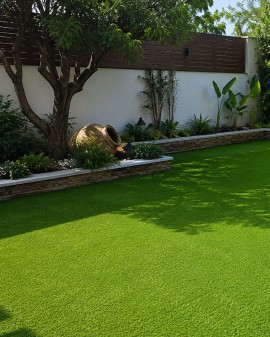
- New
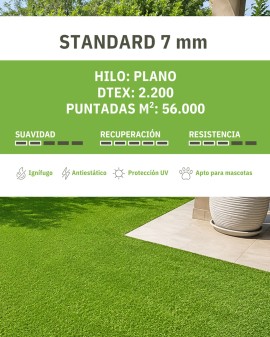
STANDARD 7 MM ARTIFICIAL GRASS BY GARBRIC
€89.24
Price
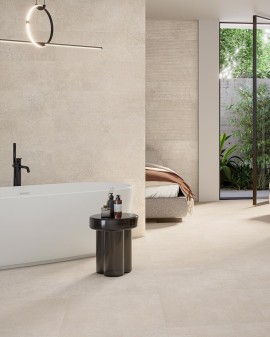



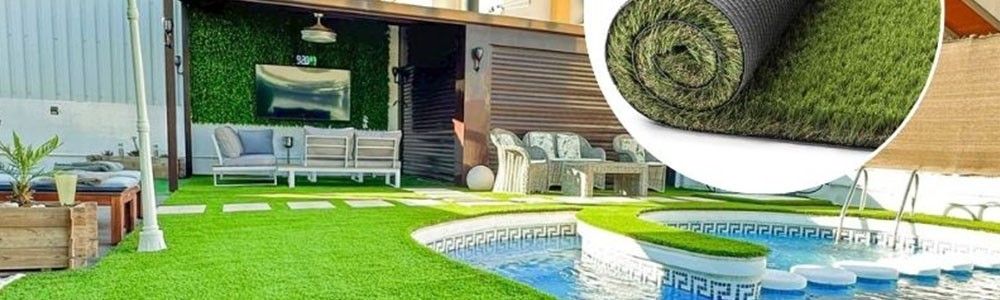
Artificial grass has become an increasingly popular solution for transforming gardens, terraces, patios, pool areas and other outdoor spaces without the constant maintenance required by natural grass. Its appearance, durability and the wide variety of available models make it possible to adapt each installation to the actual use of the space and the desired aesthetic result.
At Matcarrelage, you will find a selection of artificial grass for outdoor use designed both for private homes and larger projects. Not all artificial grass is the same: fibre height, density, softness, shade, recovery capacity and intended use can vary considerably from one model to another.
Choosing the right artificial grass therefore does not simply mean selecting the model that looks the greenest or tallest. The choice should take into account where it will be installed, how much traffic it will receive, the feel required underfoot and the level of natural appearance desired.
Artificial grass is a synthetic covering designed to visually reproduce the appearance of natural grass. It is made up of fibres that imitate blades of grass and a backing that holds the fibres together and allows the product to be installed over different types of surfaces.
Its main advantage is that it provides a green surface throughout the year without the need for mowing, regular watering, fertilising or reseeding.
Advances in materials and manufacturing techniques have made it possible to develop increasingly natural-looking models, combining different fibre heights, various shades of green and inner fibres that help reproduce the irregular appearance of real grass.
Artificial grass for gardens is one of its most common applications. It can transform an area of soil, concrete or other surfaces into a green space with a neat appearance throughout the year.
In a garden, the choice of model can depend both on use and on the desired aesthetic result. A mainly decorative area may require a different type of grass from an area where children play, pets move around or tables, loungers and outdoor furniture are placed.
Models with taller fibres generally offer a fuller and more abundant visual appearance, while shorter alternatives can be particularly practical in areas subject to frequent foot traffic.
Installing artificial grass on a terrace can completely change the perception of the space and create a warmer, more natural atmosphere over traditionally hard surfaces.
It can be combined with outdoor porcelain tiles, decking, gravel areas, planters and outdoor furniture to create compositions where different materials define the various uses of the terrace.
In this type of installation, it is especially important to take existing water drainage into account and keep terrace drainage points clear and functional.
Indoor and outdoor patios can also benefit from artificial grass. Even a relatively small surface can change considerably when a green area is introduced.
The grass can cover the entire surface or be combined with porcelain tiles, stone or other materials to create a more architectural design.
This combination is especially interesting when paved circulation areas are to be maintained while artificial grass is used as a decorative or relaxation area.
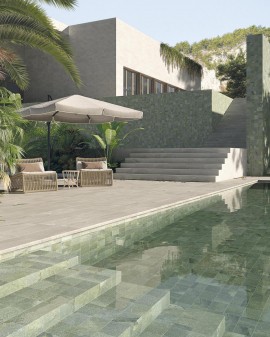
Artificial grass for pool areas can create a visual transition between paved surfaces and landscaped areas, adding colour and a more natural appearance to the overall project.
It combines particularly well with outdoor porcelain tiles, stone-effect, wood-effect or cement-effect flooring and specific pool-edge pieces.
In these areas, correct installation is essential, ensuring that water can drain away properly without becoming trapped beneath the surface.
Artificial grass can also be used on balconies and small urban terraces to introduce the feeling of a garden even where there is no natural ground.
A small balcony can be transformed by combining artificial grass with lightweight furniture, plant pots, timber and natural vegetation.
On smaller surfaces, selecting the right fibre height and density is particularly important to prevent the result from appearing disproportionate to the available space.
There is no single artificial grass model suitable for every project. Each product has specific characteristics and can offer a different performance and appearance.
Before choosing, it is advisable to consider aspects such as intended use, fibre height, density, softness, level of traffic and visual appearance.
Grass intended mainly for decoration does not necessarily need to meet the same requirements as a model installed in an area used every day by the whole family.
The height of artificial grass is one of the characteristics that most strongly influences both its appearance and feel.
Shorter grass creates a more compact-looking surface, while taller-fibre models can produce a greater sense of volume and fullness.
However, greater height does not automatically mean better quality. The balance between height, density, composition and fibre recovery is much more important than one isolated measurement.
Models around 20 mm high provide a relatively short surface and can be suitable for certain decorative spaces or areas where a more compact appearance is preferred.
They can also make it easier to integrate the grass into spaces where only a small height difference is available between it and surrounding flooring.
30 mm artificial grass offers a highly versatile middle ground between shorter models and grass with taller fibres.
It can be used in gardens, terraces and residential spaces where a balanced combination of appearance, comfort and ease of maintenance is required.
Models around 40 mm generally provide a fuller appearance and can be suitable for projects where a stronger impression of natural grass is desired.
Density and fibre quality remain essential factors in determining the final appearance and performance of the product.
Taller options such as 50 mm artificial grass can create a particularly lush appearance and a more enveloping feel underfoot.
This type of solution can be attractive for selected garden areas or decorative projects where visual impact is an important factor in the choice.
Density generally refers to the amount of fibre present over a given surface. It is one of the factors that directly influence the sense of coverage and volume.
Grass with good density can provide a more compact appearance, although this should always be assessed together with height, fibre type and the overall construction of the product.
Two artificial grass products with the same height can look completely different if their density and construction are not the same.
When artificial grass is installed in spaces where people walk barefoot, children play or the area is used for relaxation, softness can become an important selection criterion.
Some models are designed to provide a particularly pleasant feel, while others are more focused on heavy use or decorative applications.
The intended use should therefore be considered before prioritising appearance alone.
One of the main goals of residential artificial grass is to achieve an appearance that looks as natural as possible.
To do this, manufacturers can combine different shades of green, different fibre heights and inner fibres in drier or lighter tones that resemble the base of natural grass.
This combination breaks up uniformity and prevents the surface from looking completely flat in colour.
The colour of artificial grass directly influences the final appearance of the installation. Some models use lighter greens, others stronger greens and some combine several shades within the same surface.
An excessively uniform green can produce a more artificial appearance, while a mixture of different tones can add greater visual depth.
The choice should also take into account the materials surrounding the grass, especially paving, façades, walls and outdoor furniture.
When the priority is to achieve natural-looking artificial grass, height should not be the only characteristic considered.
The combination of density, different shades, irregular fibre orientation and inner fibres can have a much stronger influence on the final result.
It is advisable to view the product from a certain distance and under different lighting conditions rather than judging it only from close up.
In family gardens, terraces with furniture or areas subject to frequent foot traffic, it is important to select grass designed to withstand regular use.
The ability of the fibres to recover their position after being stepped on can be particularly relevant in this type of area.
Attention should also be paid to installation, as correct preparation of the surface directly affects final performance.
Artificial grass for pets can be a practical solution for gardens, terraces and patios where dogs or other domestic animals live.
In these cases, in addition to appearance, drainage capacity and ease of cleaning become particularly important.
Correct installation helps liquids drain away and contributes to keeping the area in better condition.
In areas used by children, a surface that feels pleasant and sufficiently comfortable for play is generally preferred.
The choice should take into account the actual use of the area, the existing base and the expected level of foot traffic.
Artificial grass can be combined with ceramic paving to visually separate play areas from circulation areas.
Correct water drainage is one of the most important aspects of any outdoor artificial grass installation.
Both the base underneath and the drainage system of the grass itself must allow rainwater or cleaning water to drain away correctly.
Drainage holes in the grass alone are not sufficient if the surface underneath does not allow the water to escape afterwards.
Artificial grass intended for outdoor use is exposed to sunlight for many hours, so the product’s characteristics in relation to UV exposure should be taken into account.
The resistance and stability of the fibres under outdoor exposure depend on the quality and construction of each model.
The exact specifications should always be checked on the technical data sheet of the selected product.
One of the main reasons for choosing artificial grass is the significant reduction in maintenance compared with a traditional lawn.
It does not require mowing or regular watering to retain its colour, although this does not mean it is completely maintenance-free.
Leaves, dust and other debris should be removed periodically and, depending on use, brushing the fibres may help maintain a more uniform appearance.
Routine cleaning depends on where the grass is installed and how heavily the area is used.
Leaves, soil and dust can accumulate on terraces and in gardens and should be removed regularly. Areas used by pets may require more frequent cleaning.
Following the manufacturer’s specific maintenance recommendations helps preserve the product correctly for longer.
Installing artificial grass over natural ground requires correct preparation of the surface before laying the product.
The ground must be stable, correctly levelled and prepared to facilitate water drainage.
A poorly prepared base can result in uneven areas, sinking or sections where water remains trapped.
Artificial grass can also be installed over rigid surfaces such as concrete or certain existing paved areas.
In these cases, the slope and the presence of drainage points should be checked particularly carefully.
The surface should be clean, stable and sufficiently even before installation begins.
The combination of artificial grass and porcelain paving makes it possible to create highly attractive outdoor spaces while organising the different uses of the area more effectively.
Porcelain tiles can be used in circulation areas, outdoor dining areas, pool surrounds or entrances, while artificial grass can be reserved for relaxation and garden zones.
The contrast between the mineral surface of the paving and the green texture of the grass adds depth to the project.
Stone-effect paving combines particularly well with artificial grass because of its natural appearance.
Beige, sand, grey or limestone tones can be used to create a soft transition between paved and green areas.
This combination works particularly well in gardens, terraces and around swimming pools.
Wood-effect paving introduces another natural reference into the outdoor space and can create especially warm environments.
It can be used as terrace flooring while artificial grass covers the areas intended for garden or relaxation use.
The combination of timber, green tones and natural vegetation creates organic and contemporary outdoor spaces.
In contemporary projects, artificial grass can be used as another material within the architectural composition.
Large-format porcelain tiles, gravel, concrete, timber and grass can be combined to define different areas through changes in texture.
In these projects, it is especially important to define the levels of each surface in advance to achieve clean transitions.
Artificial grass can be integrated into Mediterranean-style gardens by combining it with pale stone, ceramic surfaces, timber, gravel and vegetation adapted to the climate.
This combination makes it possible to retain a green area even in projects where the aim is to reduce the water consumption associated with natural grass.
Olive trees, aromatic plants, terracotta pots and sand-toned paving can complete this type of setting.
A large garden is not necessary to use artificial grass. A small terrace, patio or even balcony can incorporate a green surface.
In compact spaces, it is generally important to keep the composition simple and avoid using too many different materials.
A grass area combined with a few plants and carefully chosen furniture can completely transform the perception of the space.
In large gardens and large-scale projects, planning becomes even more important.
The layout of rolls, joins, cuts and material optimisation should be calculated correctly to reduce waste.
The direction of the fibres should also remain consistent to avoid visual differences between the different strips once installed.
Artificial grass fibres have a certain orientation as a result of the manufacturing and rolling process.
During installation, the different sections should be laid in the same direction to maintain a uniform appearance.
Different orientation between rolls can make two sections of the same product appear to be different colours depending on the way they receive the light.
Artificial grass can be sold in different widths, lengths and roll formats depending on the manufacturer and model.
Before ordering, it is important to check the available dimensions and plan how the product will be distributed across the surface.
Correct planning can significantly reduce both the number of cuts and the amount of leftover material.
Artificial grass quantities should not be calculated simply by adding up the square metres of the area.
The width of the rolls, installation direction and shape of the space must also be considered, as some areas may generate cuts and leftover material.
For this reason, two gardens with exactly the same surface area may require different quantities of material depending on their shape.
When the surface is wider than the available roll width, several strips need to be joined together.
The joins should be completed carefully so that they are as discreet as possible once installation is finished.
Correct fibre orientation and accurate preparation of the edges directly influence the final result.
To decide which artificial grass to buy, the first step is to define where it will be installed and how it will be used.
Factors such as height, density, softness, shade, appearance and technical characteristics can then be compared.
Buying solely according to height or price may result in choosing a model that is not the most suitable for the project.
Artificial grass is available at different price levels depending on its characteristics, construction and finish.
An affordable model can be perfectly suitable for certain uses, especially when the priority is not to reproduce the appearance of natural grass as closely as possible.
The important point is to relate the cost to the intended use rather than comparing products only by their price per square metre.
Models designed to achieve a particularly natural appearance generally use more elaborate combinations of fibres, shades and densities.
The final impression depends on the complete set of characteristics and not simply on using very tall fibres.
For projects where appearance is especially important, comparing samples and viewing the product installed or rolled out over a sufficiently large area is advisable.
Buying artificial grass online makes it possible to compare different heights, finishes, uses and price ranges before selecting the most appropriate product.
At Matcarrelage, we organise our range to make it easier to compare models and quickly identify the main characteristics of each reference.
Each product page will show the available characteristics so you can evaluate which solution is best suited to your garden, terrace or outdoor project.
Artificial grass offers a simple way to introduce a green surface into gardens, terraces, patios, balconies and other outdoor areas without taking on the continuous maintenance required by natural grass.
The variety of heights, densities, shades and finishes makes it possible to adapt the choice to very different projects, from small urban terraces to gardens and larger outdoor surfaces.
At Matcarrelage, you will find different artificial grass solutions that can be compared according to their characteristics, dimensions and recommended use, while also combining them with ceramic paving, stone, timber and other materials to create a complete outdoor project.