Español
 Français
 English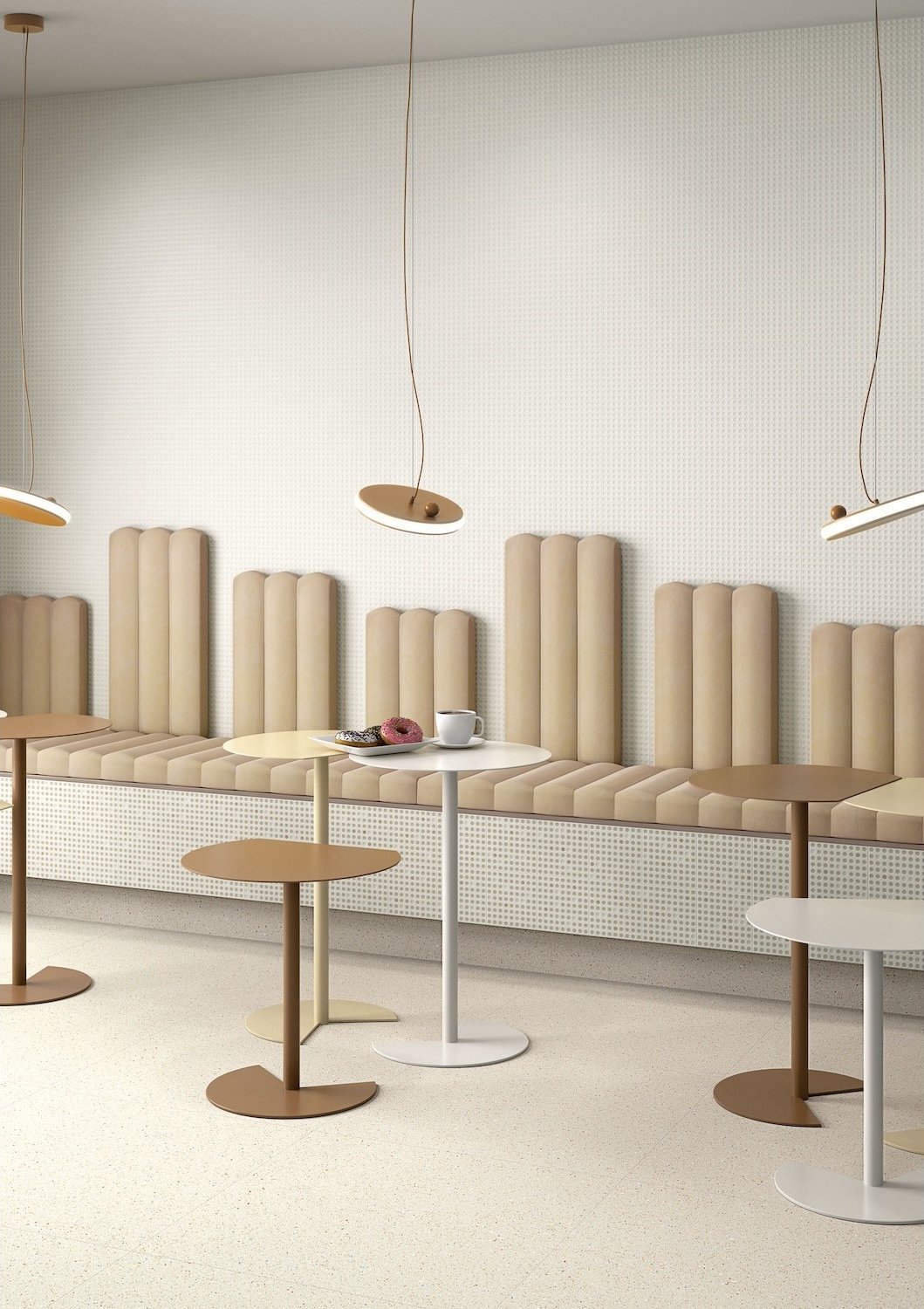
- -15%

The Zepto Mili/Deca 13x13 wall tile collection by Vives explores the decorative potential of small-format ceramics through two geometric reliefs with clearly differentiated personalities. Mili introduces a sequence of small circular elements across the surface, creating a delicate and repetitive texture, while Deca develops a more architectural composition through a square frame that emphasises the perimeter of each tile. Both designs share a clean visual language, a matt finish and a compact scale capable of transforming a wall without relying on overloaded patterns or excessively dominant colours.

 Security policy
All payment options are under SSL certificate with encryption
 Delivery policy
We deliver with a flatbed truck to any destination in Spain, France and Belgium. Consult other dest
The Zepto Mili/Deca 13x13 wall tile collection by Vives explores the decorative potential of small-format ceramics through two geometric reliefs with clearly differentiated personalities. Mili introduces a sequence of small circular elements across the surface, creating a delicate and repetitive texture, while Deca develops a more architectural composition through a square frame that emphasises the perimeter of each tile. Both designs share a clean visual language, a matt finish and a compact scale capable of transforming a wall without relying on overloaded patterns or excessively dominant colours.
These models should not be understood as simple plain wall tiles. Their character comes from texture, modular repetition and the way the relief changes the perception of the surface throughout the day. Side lighting accentuates the small volumes of Mili and defines the framed geometry of Deca more clearly. Under frontal lighting, the relief becomes softer and the wall appears calmer and more orderly. This ability to change according to the direction of light makes the collection especially interesting for interior design, architecture and contemporary decorative projects.
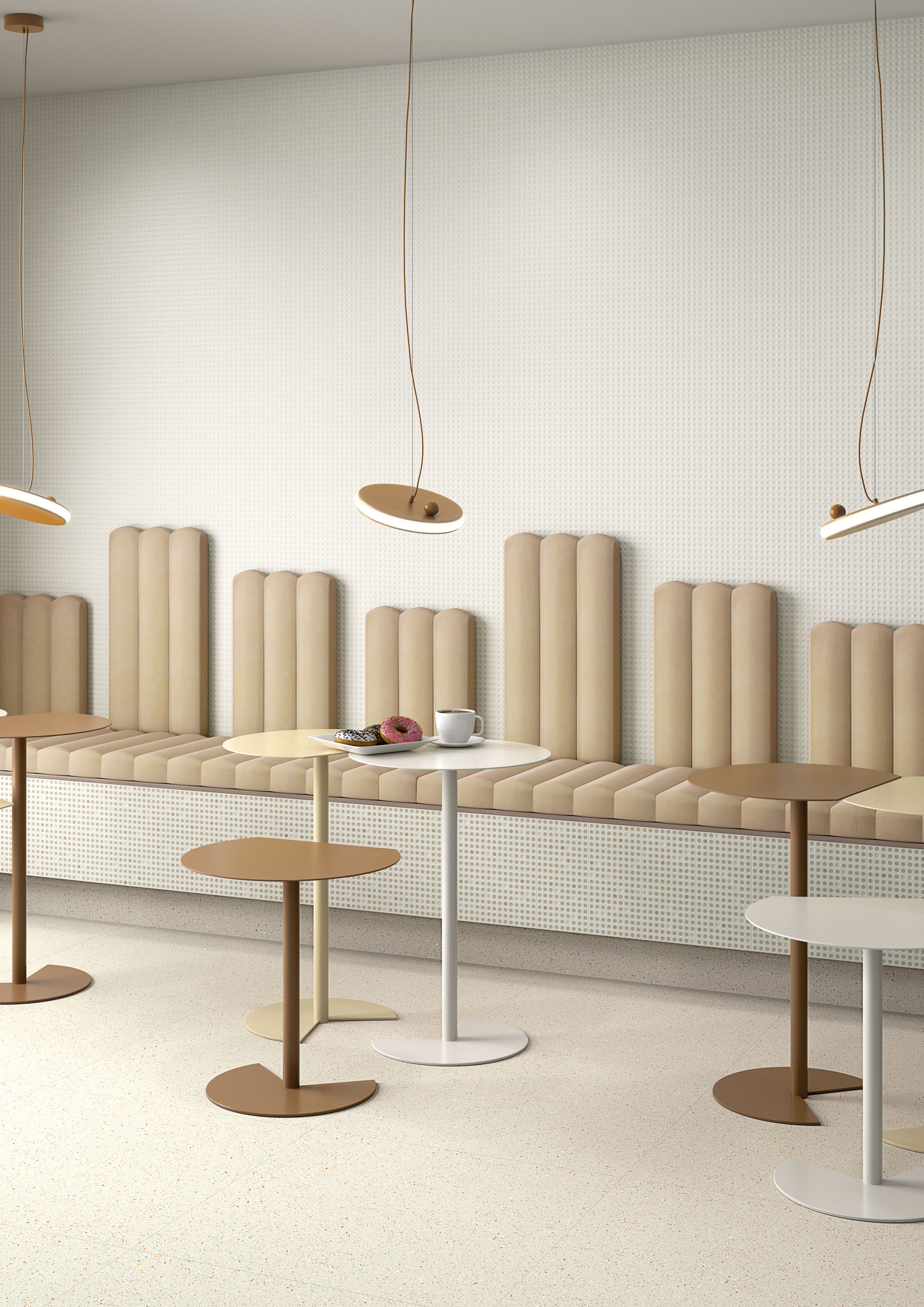
Mili and Deca offer two different ways of introducing texture into an interior wall. Mili features a regular arrangement of small raised dots or circular forms distributed precisely across the tile. From a distance, the composition takes on an almost textile-like appearance, similar to a finely perforated or woven surface. At closer range, the detail of each volume and the accuracy of the layout become more apparent.
Deca adopts a more structural language. Its relief is concentrated near the edges, creating an inner square bordered by a subtle raised line. Once installed, each tile retains a clearly defined identity and forms a highly legible architectural grid. The result recalls decorative wall panels, geometric mouldings and certain modernist compositions, reinterpreted through a far more restrained and contemporary aesthetic.
This contrast makes it possible to choose the atmosphere of the space without losing the coherence of the Zepto range. Mili offers a fine, detailed and dynamic texture. Deca conveys order, depth and stronger geometric definition. The two models can also be used within the same project to distinguish different areas, create transitions or introduce variations in relief while maintaining colour continuity.
The 13x13 cm format brings a traditional ceramic scale back into current interior design. Compared with the visual continuity of large slabs, small-format tiles introduce rhythm, proportion and a much stronger sense of material presence. The grout joint becomes part of the composition and helps define the grid, particularly in the Deca model, where the inner relief directly echoes the outline of the tile itself.
The revival of small-format ceramics is not merely a stylistic trend. It also reflects a renewed interest in surfaces with greater expression, detail and a sense of craftsmanship. The wall is no longer treated as a neutral plane but as a sequence of modules that build the atmosphere tile by tile. The compact format can be used on full walls, partial surfaces, furniture fronts, bar counters, niches and small architectural features.
With Mili, the repeated circular pattern creates a continuous visual vibration. With Deca, the square format is reinforced by a second internal square, producing depth and a feeling of geometric precision. Each design uses the 13x13 scale differently, while both retain the distinctive character of small-format ceramic wall tiles.
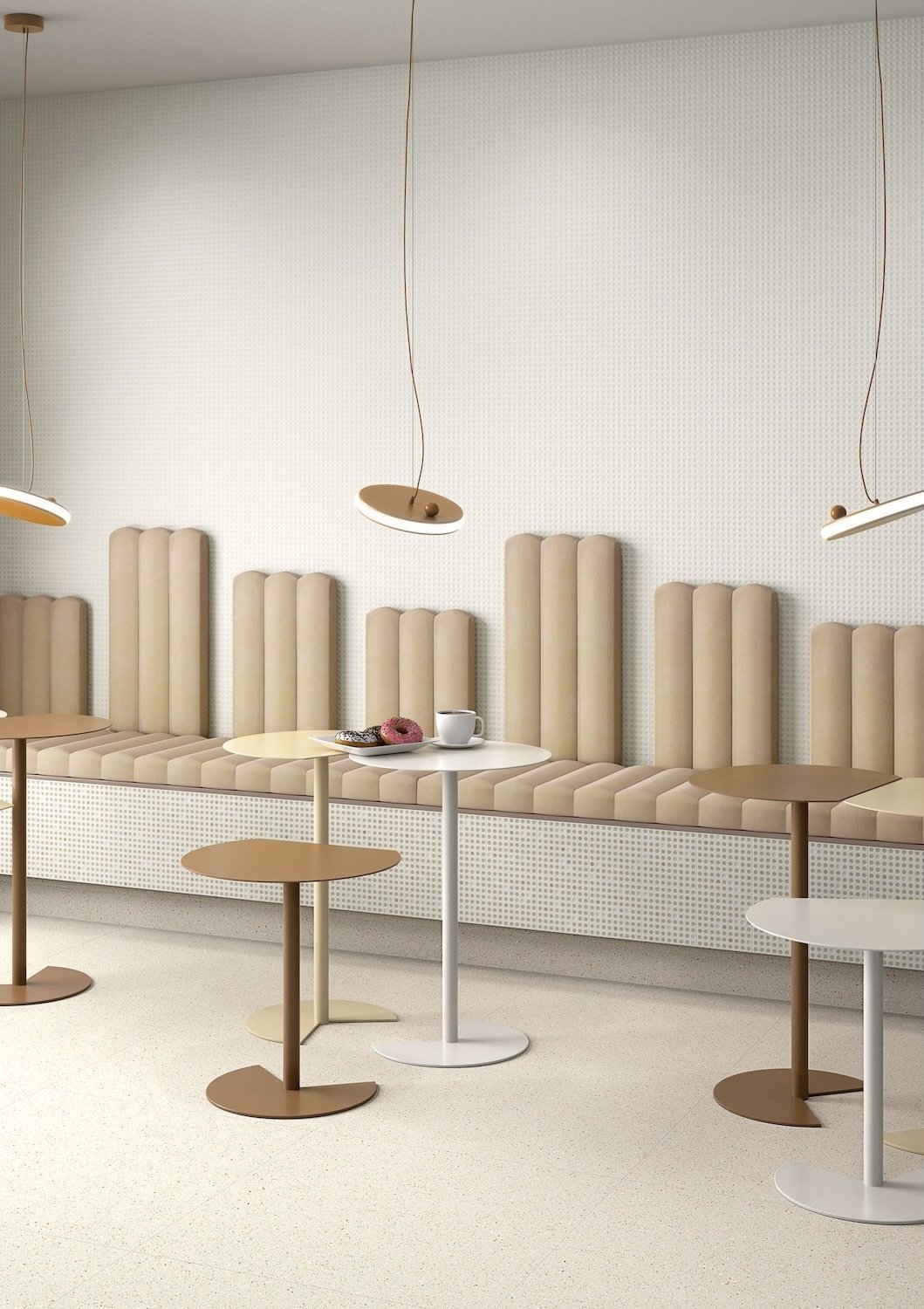
The Mili decorative tile by Vives is defined by a regular pattern of small rounded volumes. Its design does not aim to create a figurative image, but instead works with repetition, light and shadow. The surface gains movement while maintaining a restrained appearance, making it particularly suitable for spaces where texture is required without disrupting a controlled colour palette.
The reduced scale of the relief allows Mili to be used across larger surfaces without making the composition feel heavy. From a distance, it reads as a continuous texture. At closer range, the details become visible, together with the delicate shadows cast by each raised element. This dual reading adds depth to bathroom walls, kitchens, reception areas, restaurants, boutiques and other commercial interiors.
In projects using indirect lighting or wall-mounted fittings, Mili becomes especially expressive. Grazing light travels across the surface and creates a succession of small shadows that change according to the position of the viewer. It is not a decorative tile based primarily on colour, but a more architectural intervention in which volume becomes the central design element.
The Deca 13x13 wall tile is based on a clear and instantly recognisable geometry. The subtle raised frame repeats the square form of the tile and creates a sequence of parallel lines between the grout joint and the inner surface. This duplication of the perimeter reinforces the modular character of the wall and produces an ordered, elegant and highly precise composition.
Deca works particularly well in interiors where geometry is part of the overall concept. It can complement linear furniture, metal-framed joinery, monolithic worktops, square mirrors and carefully structured architectural details. The relief introduces depth without competing with the surrounding materials. Its restrained and disciplined language can be integrated into minimalist interiors as well as projects with a retro influence.
The final appearance of Deca changes depending on the contrast between the tile colour and the grout. A grout in a similar tone creates a quieter and more continuous surface. A slightly contrasting grout emphasises the grid and highlights the small-format installation. This allows the character of the wall to be adjusted without changing the ceramic product itself.
Mili and Deca are available in Blanco and Grafito, two opposing colours that transform the expression of the relief. Blanco increases brightness, softens the texture and creates luminous surfaces. In this version, the shadows remain delicate and the geometry emerges gradually, resulting in elegant walls that can be integrated into a wide range of interior styles.
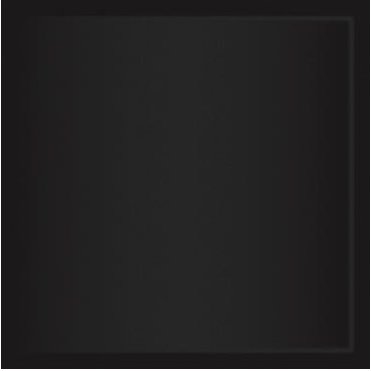
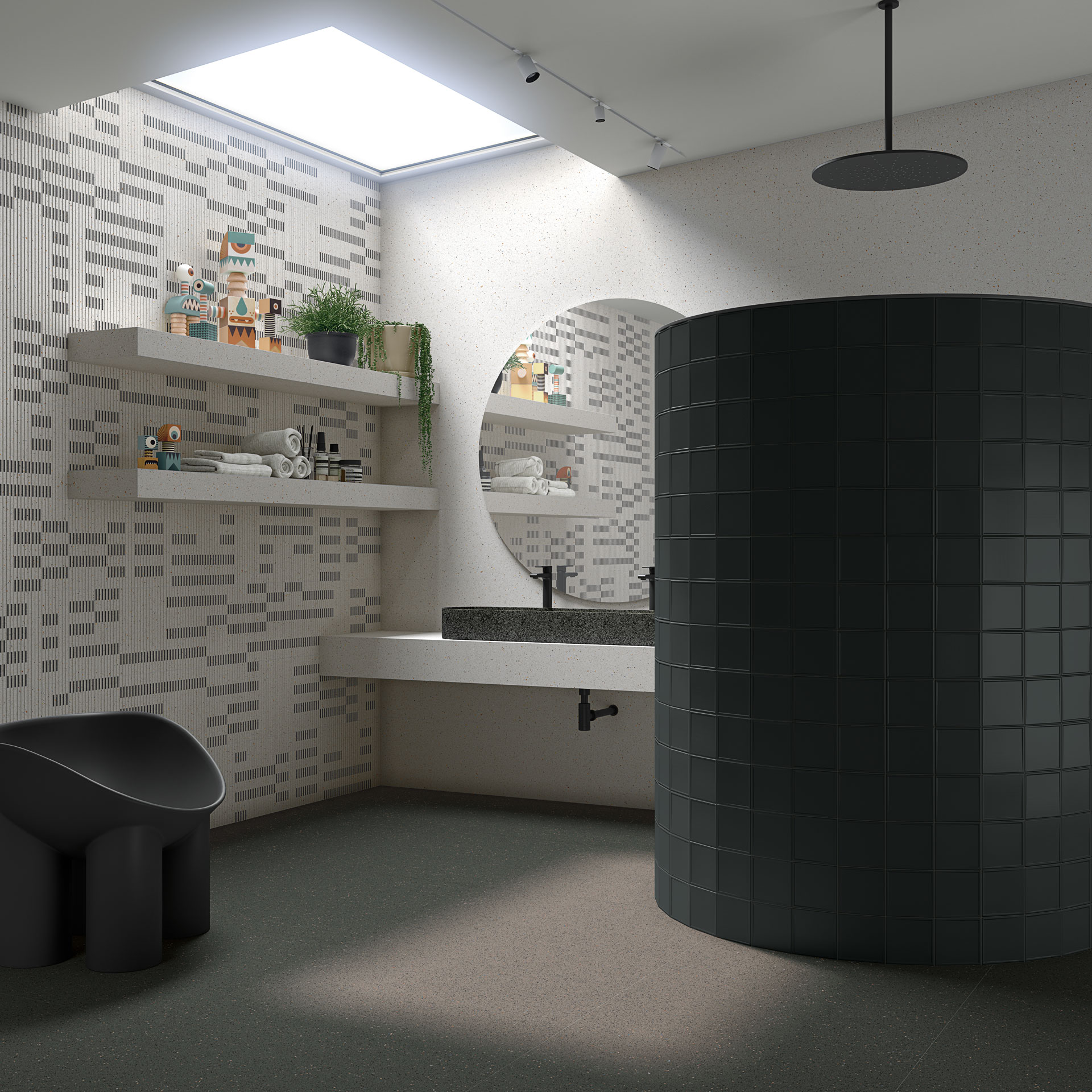
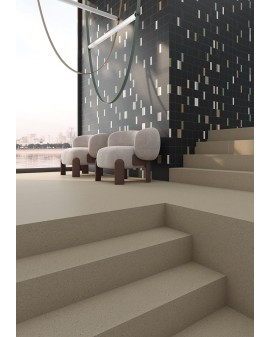
Grafito creates a more intense visual effect. Against the dark background, the relief appears deeper and the variations in light become more noticeable. It is a colour with a strong architectural presence, suitable for accent walls, restaurant bars, vanity areas, retail interiors and striking black-and-white compositions.
Combining both colours makes it possible to create two-tone schemes while preserving formal unity. Blanco and Grafito can be organised by area, alternated across selected surfaces or used to distinguish different volumes. The darker tone can also be reserved for a focal point while Blanco is used on the surrounding walls to maintain balance and hierarchy within the interior.
The matt finish plays an essential role in the collection. By avoiding the strong reflections associated with glossy surfaces, it allows the relief to be expressed through soft shadows and subtle changes in brightness. The texture remains naturally visible without glare concealing the geometric detail or distorting the reading of the wall.
On Blanco, the matt surface creates a calm, almost mineral appearance. Light is diffused gently and reveals either the small volumes of Mili or the framed square design of Deca. On Grafito, the same finish produces a deeper and more sophisticated surface, especially when combined with warm lighting, natural timber, metal details or pale materials.
The absence of dominant shine also makes the tiles easier to integrate into contemporary schemes. They can be combined with stone worktops, lacquered cabinetry, concrete, wood, steel, glass or plain ceramics without creating an excessive accumulation of reflections. The relief enriches the composition while the matt finish keeps the overall design controlled.
Zepto Mili and Deca are white-body ceramic tiles designed for interior wall covering. This wall-specific use should be considered when planning the project, as they are not floor tiles and are not porcelain stoneware intended for horizontal surfaces. Their purpose is to transform vertical areas through colour, geometry and texture.
The 7.4 mm thickness maintains a balanced proportion in relation to the small format. The tile has a clear material presence while remaining compatible with other wall finishes and coordinated elements within the Zepto collection. The 13x13 module can be used across full walls or focused on more limited areas such as a washbasin backdrop, a decorative panel or the splashback between a kitchen worktop and wall units.
The installation should be carefully planned so that the grid remains regular and visually balanced. With such a geometric product, tile alignment and consistent grout joints have a direct influence on the final result. Accurate laying allows the texture to extend continuously and preserves the intended rhythm of the relief.
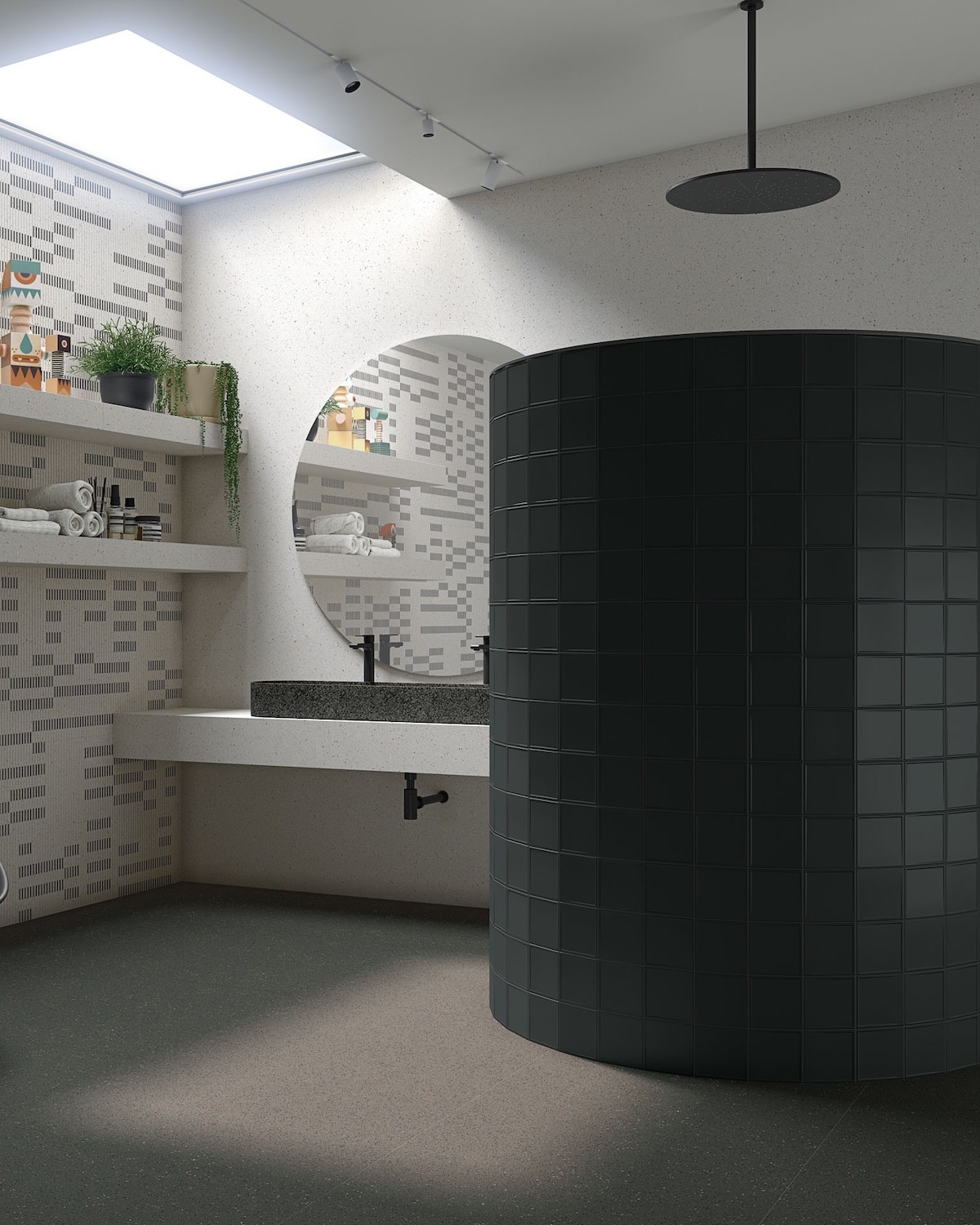
In bathroom interiors, Mili and Deca offer an alternative to completely flat wall surfaces. The relief adds interest around the washbasin, behind the mirror, inside a niche or across a decorative feature wall. The small format adapts naturally to compact areas and reinforces the more intimate scale of the room.
Mili Blanco can introduce a luminous and refined texture into contemporary, Nordic or Mediterranean-style bathrooms. Combined with pale timber, chrome fittings or neutral stone, it creates a detailed surface without reducing brightness. Deca Grafito, by contrast, can produce a deeper and more dramatic backdrop, particularly behind a wall-mounted basin or alongside white sanitaryware.
Both reliefs can also be used as transitional elements between materials. A vertical or horizontal band of Mili can separate a plain tiled area from a painted wall, while Deca can frame a mirror or emphasise a niche. Their value is not limited to covering large surfaces; they also offer precision in more focused architectural interventions.
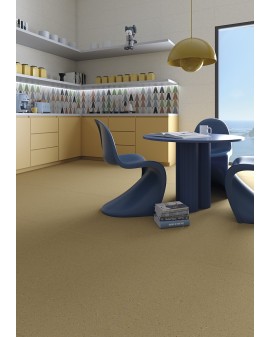
The kitchen is another setting where the 13x13 format feels especially appropriate. Used as a vertical wall covering, it introduces a more domestic and tactile scale that contrasts with the continuity of worktops and cabinetry. The result can remain understated or become far more expressive depending on the choice between Mili, Deca, Blanco and Grafito.
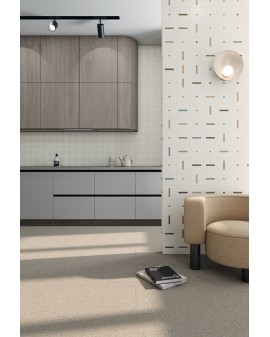
Mili introduces a fine texture into a kitchen splashback and works particularly well with smooth-fronted furniture. The circular pattern breaks up uniform surfaces without relying on conventional ornamental graphics. Deca creates a more architectural composition in which each tile is clearly defined and the wall takes on the appearance of a structured grid.
Blanco supports bright and balanced kitchen schemes, while Grafito adds depth to compositions featuring light cabinetry, timber or neutral worktops. In both cases, the relief gives greater richness to a simple palette, with changing light replacing the need for multiple colours or printed patterns.
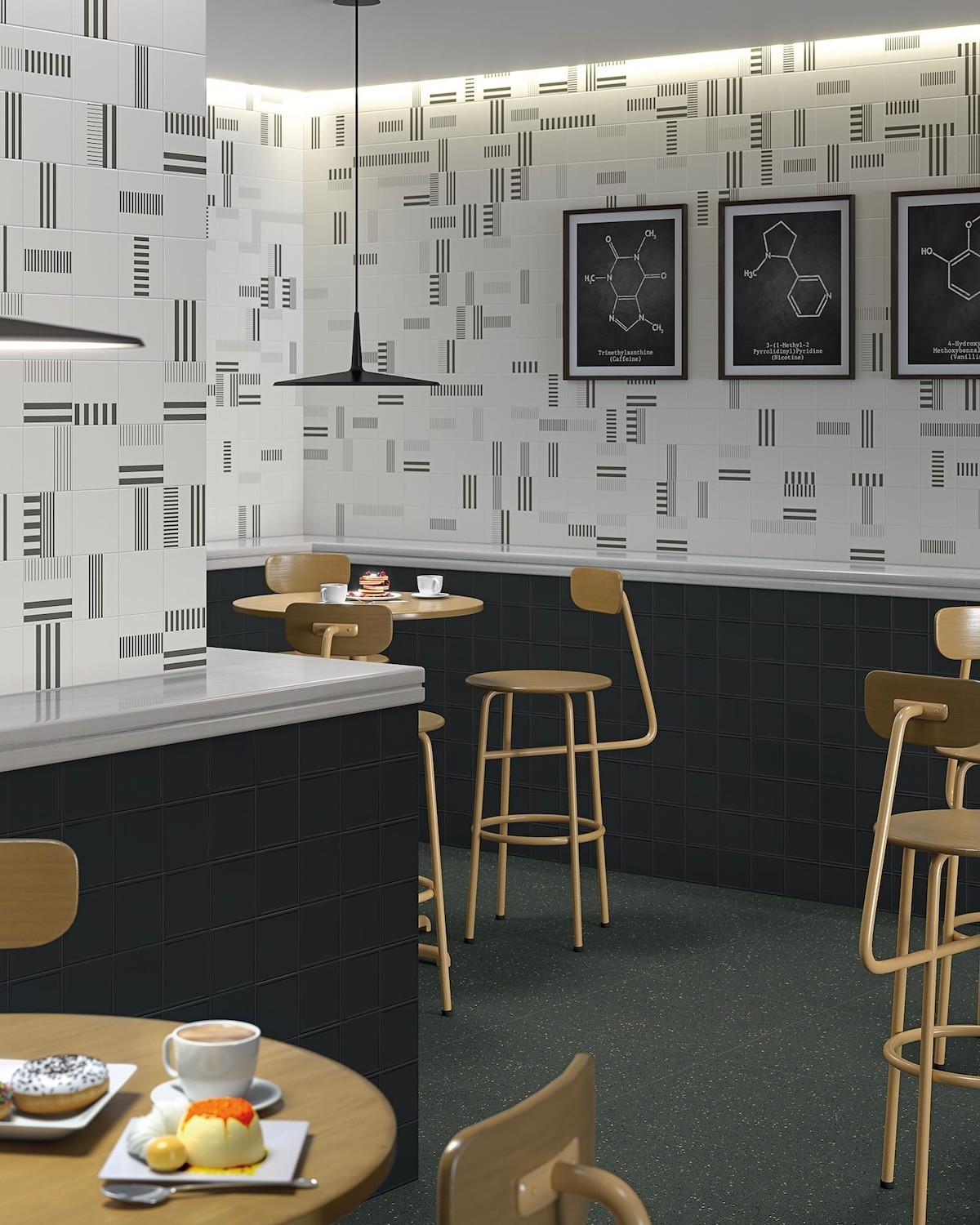
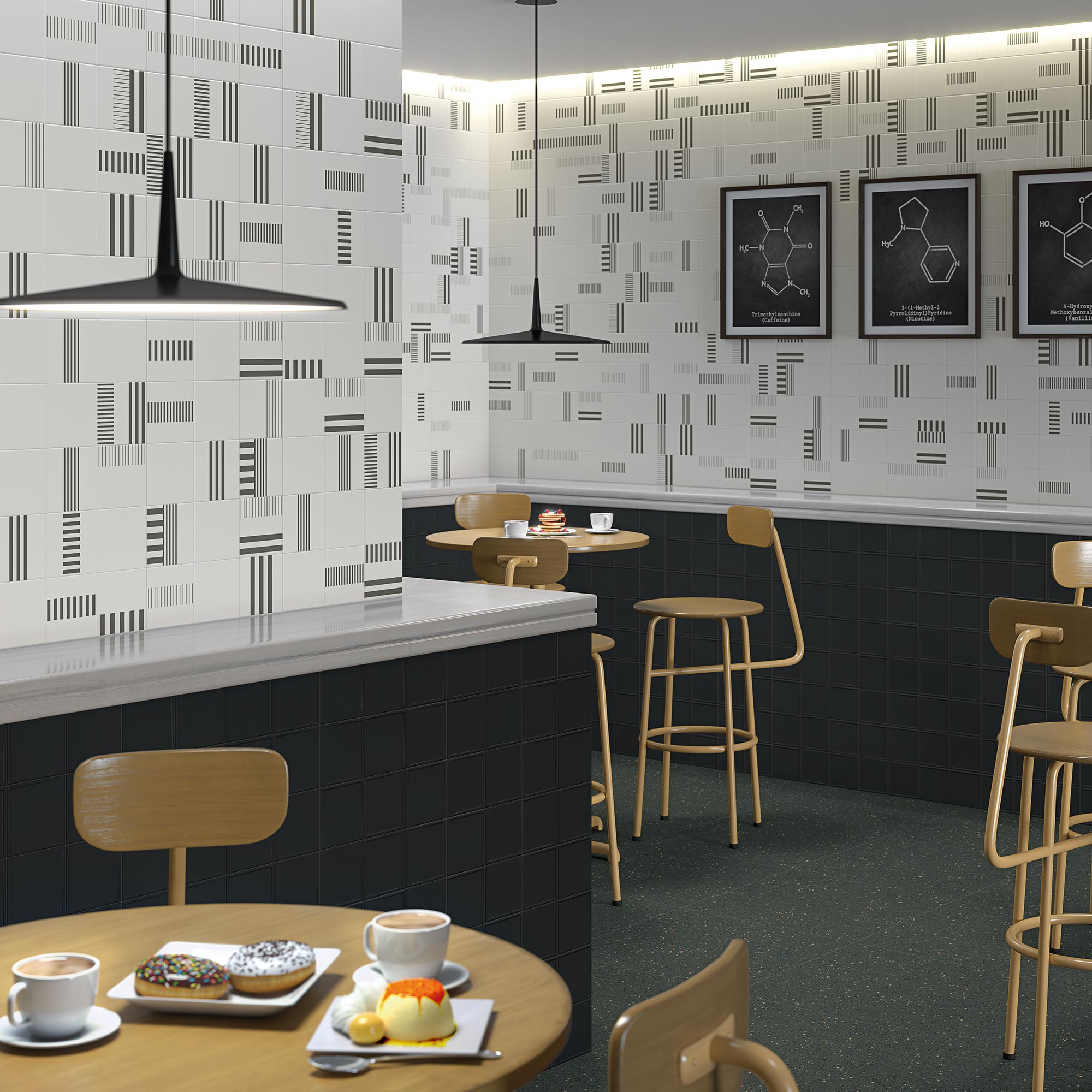
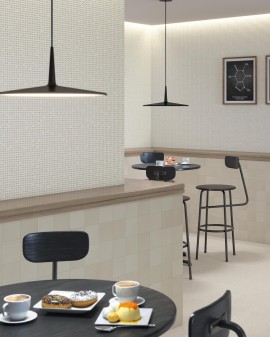
In hospitality and retail projects, ceramic surfaces often play an important role in creating a recognisable identity. Zepto Mili and Deca by Vives provide enough decorative character for reception areas, bar fronts, washrooms, waiting spaces, counters and feature walls without depending on graphics that may quickly become dated.
The Mili relief can introduce a refined texture to a restaurant bar or the wall behind a hotel reception desk. Deca, with its framed geometry, creates a more ordered and architectural image, well suited to projects based on precision, symmetry and visual clarity. The combination of Blanco and Grafito can also reinforce the identity of the space through carefully controlled contrast.
Professional lighting becomes particularly important in these applications. Adjustable spotlights, linear LED systems or side-mounted wall lights can highlight the relief and create different moods between daytime and evening use. The ceramic surface is no longer simply a background but an active part of the spatial experience.
Mili and Deca form part of the wider Zepto collection by Vives, which brings together plain pieces and a range of small-format decorative designs. This variety allows texture to be concentrated only where it is needed. A wall can combine a calmer main surface with a relief panel, a vertical strip, a tiled dado or a framed decorative feature.
Mili can transition very subtly into plain surfaces because its design is based on a microtexture. Deca creates a more defined change and can act as an organising element within the composition. Blanco and Grafito also make it possible to develop monochrome schemes, direct contrasts or sequences alternating between light and dark tones.
This flexibility is especially useful in renovation and interior architecture projects where covering the entire room with a single tile may not be desirable. Alternating surfaces makes it possible to control the visual impact, concentrate the decorative detail and adapt the wall covering to the existing architecture.
The main strength of Zepto Mili/Deca matt 13x13 lies in its ability to decorate without relying on a dominant printed graphic. Its personality comes directly from the body of the tile, its relief and its modular repetition. This creates walls with depth and detail while maintaining a timeless and adaptable appearance.
Mili is suited to projects that require a fine, rhythmic and constantly changing texture. Deca responds to interiors where geometry, structure and precision play a stronger role. Blanco softens the surface and amplifies the light, while Grafito intensifies the shadows and creates a more assertive background. The matt finish unifies these options and allows the volume to remain the true visual focus.
With its compact format, geometric language and two complementary reliefs, the Zepto Mili and Deca decorative wall tile collection by Vives offers an alternative to flat walls and conventional decorative tiles. It is a ceramic solution designed to work with architecture, enrich lighting and give a distinctive identity to bathrooms, kitchens, hotels, restaurants, residential interiors and commercial projects through a precise and highly material composition.
Data sheet
No customer reviews for the moment.
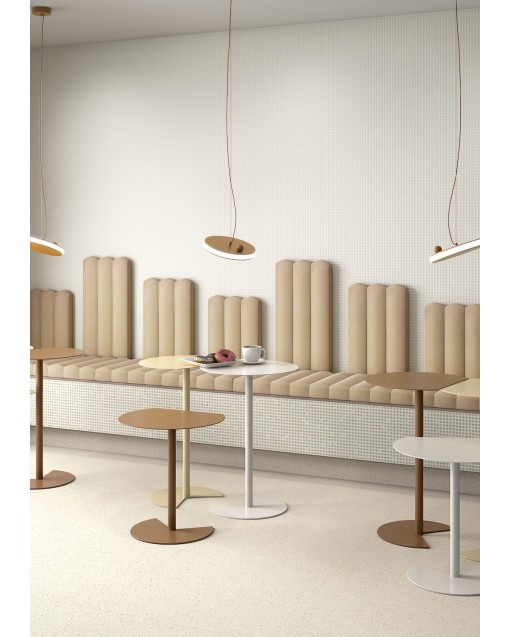
The Zepto Mili/Deca 13x13 wall tile collection by Vives explores the decorative potential of small-format ceramics through two geometric reliefs with clearly differentiated personalities. Mili introduces a sequence of small circular elements across the surface, creating a delicate and repetitive texture, while Deca develops a more architectural composition through a square frame that emphasises the perimeter of each tile. Both designs share a clean visual language, a matt finish and a compact scale capable of transforming a wall without relying on overloaded patterns or excessively dominant colours.