Español
 Français
 English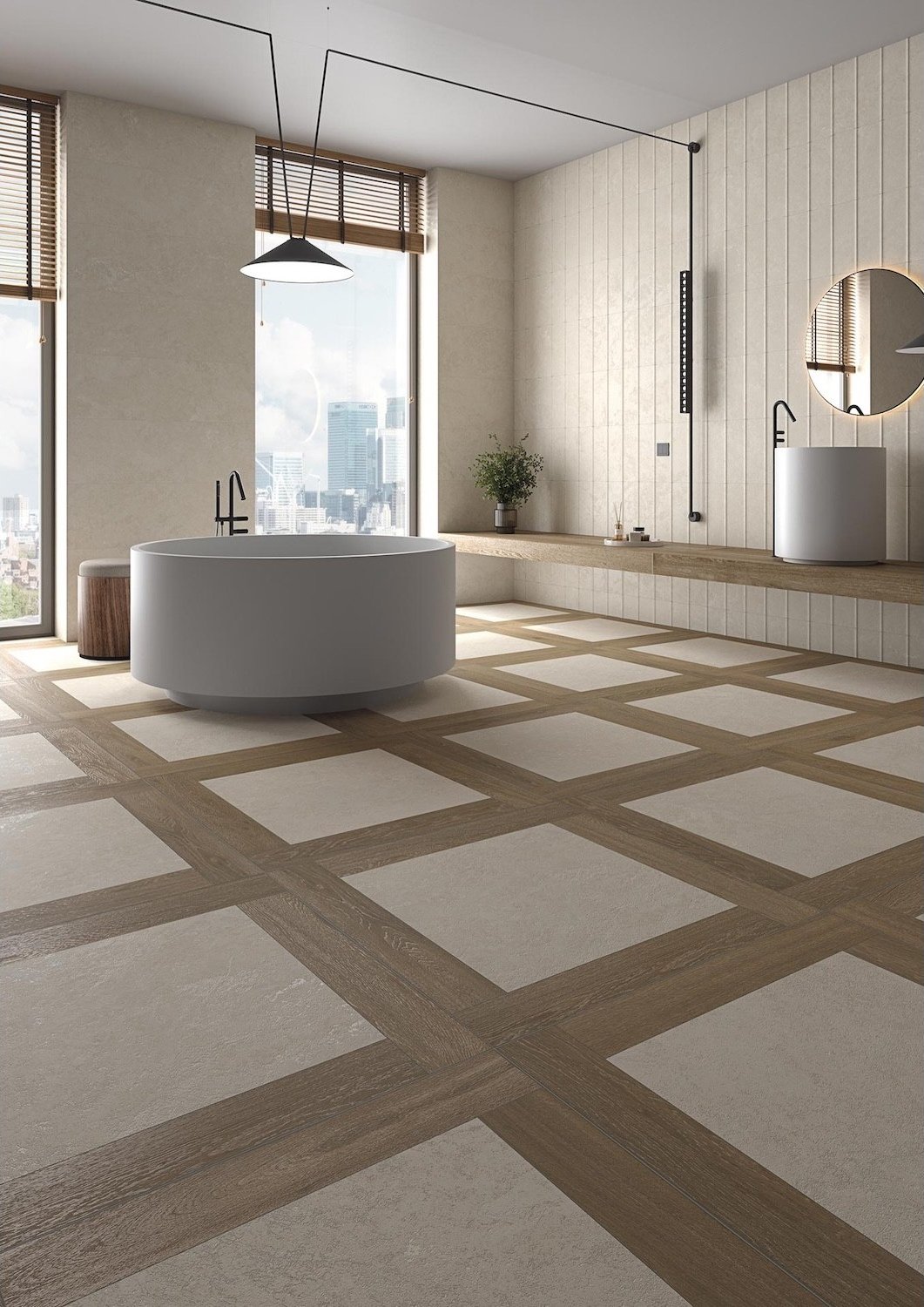
- -15%
- New
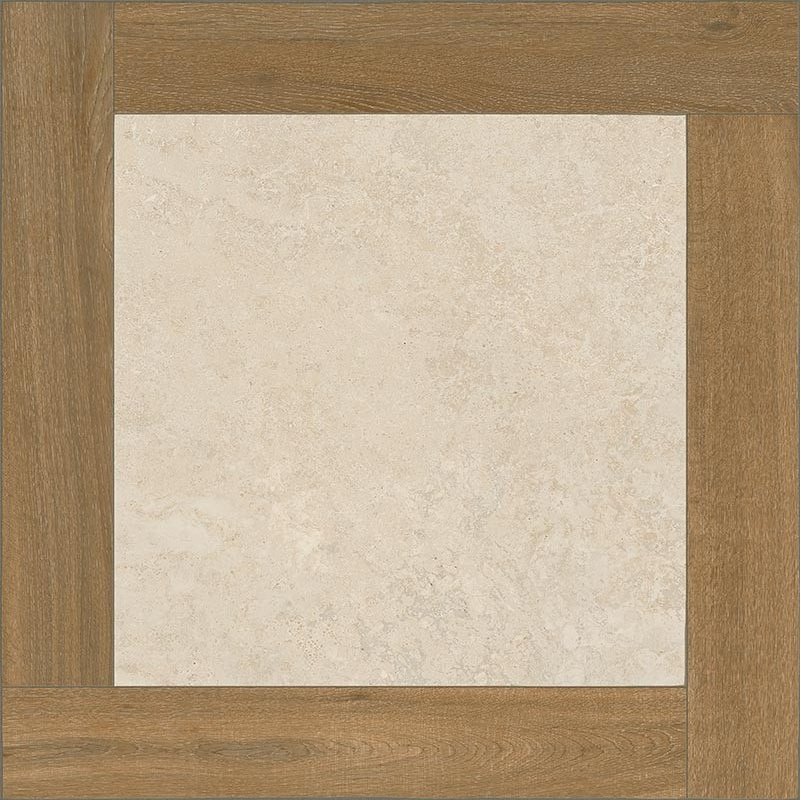
The Camden and Lambeth decorative tiles from the London collection by Vives expand the possibilities of concrete-effect porcelain stoneware through two large-format compositions with clearly differentiated identities. Camden develops a framed geometric structure in an 80x80 cm format, while Lambeth presents a freer distribution of small square inserts over a 120x120 cm base. Both models share the Natural colour, matt finish and mineral aesthetic of London, but transform the surface through completely different decorative approaches.

 Security policy
All payment options are under SSL certificate with encryption
 Delivery policy
We deliver with a flatbed truck to any destination in Spain, France and Belgium. Consult other dest
The Camden and Lambeth decorative tiles from the London collection by Vives expand the possibilities of concrete-effect porcelain stoneware through two large-format compositions with clearly differentiated identities. Camden develops a framed geometric structure in an 80x80 cm format, while Lambeth presents a freer distribution of small square inserts over a 120x120 cm base. Both models share the Natural colour, matt finish and mineral aesthetic of London, but transform the surface through completely different decorative approaches.
These pieces have been designed to create feature floors without abandoning the restrained character associated with concrete. They do not rely on excessively ornamental patterns or colour contrasts unrelated to the collection. The decoration comes from the combination of different tonal intensities, simple geometries and a composition integrated directly into the porcelain tile itself.
Camden and Lambeth can be used as the main flooring, as a decorative panel within a larger surface or as an element intended to differentiate a specific area. Their connection with the London Natural base tiles makes it possible to combine them with other formats in the range and create projects where decoration becomes a natural part of the architecture.
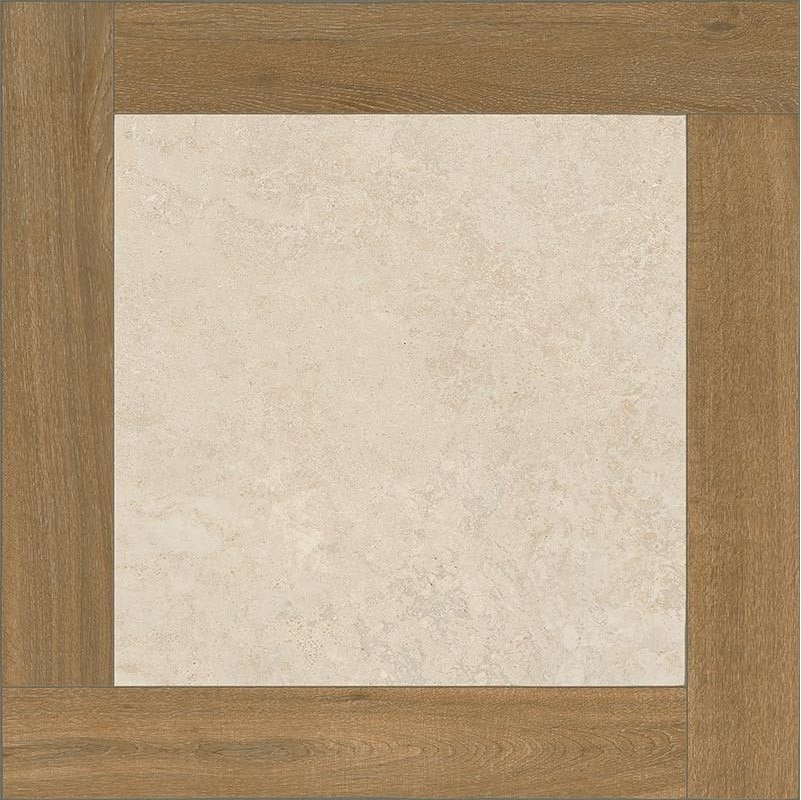
Although Camden and Lambeth belong to the same family, their designs follow very different approaches. Camden-R Natural 80x80 uses a pale central composition surrounded by a frame in a deeper shade. The result recalls a geometric rug, modular floor or architectural layout created through perimeter bands.
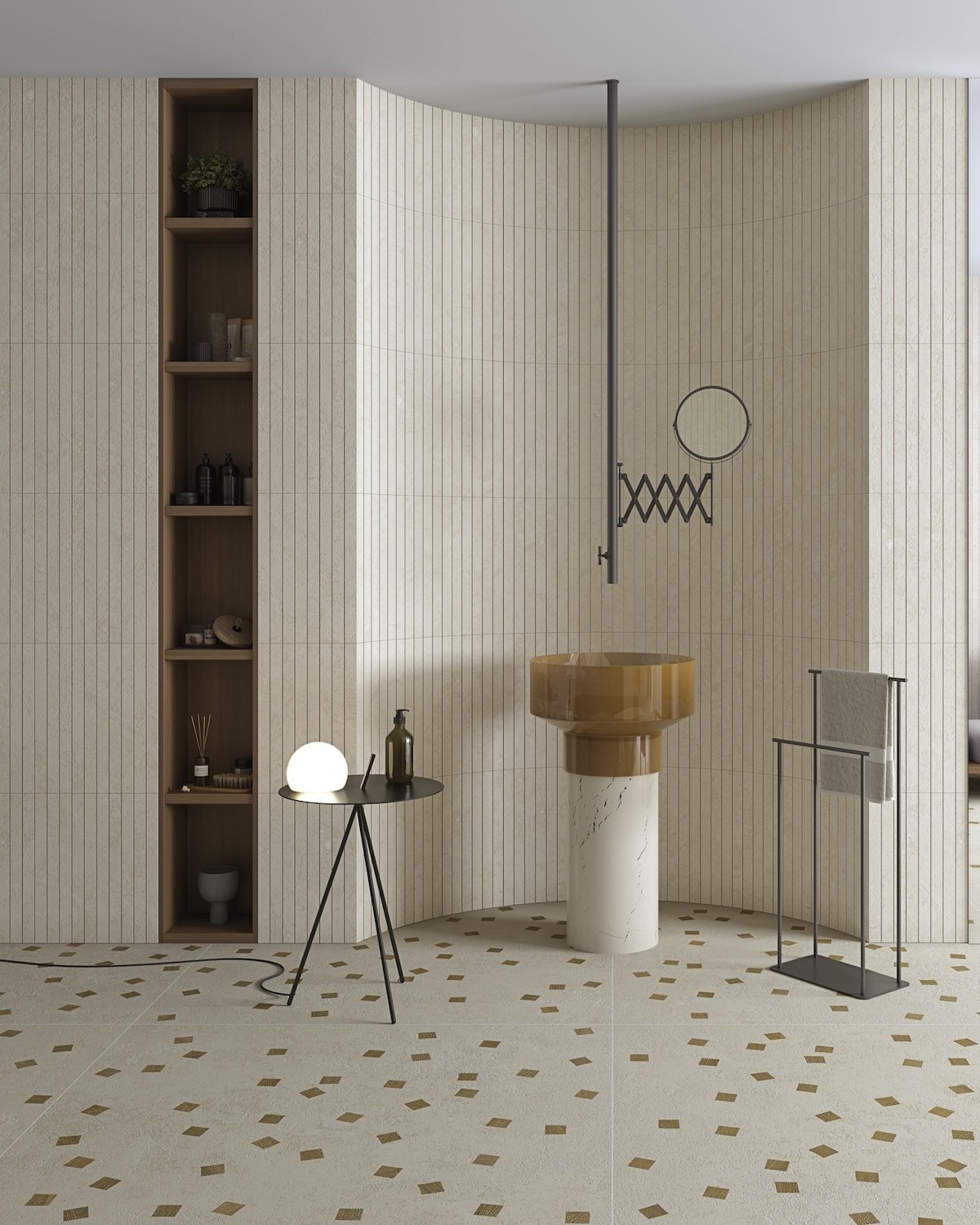
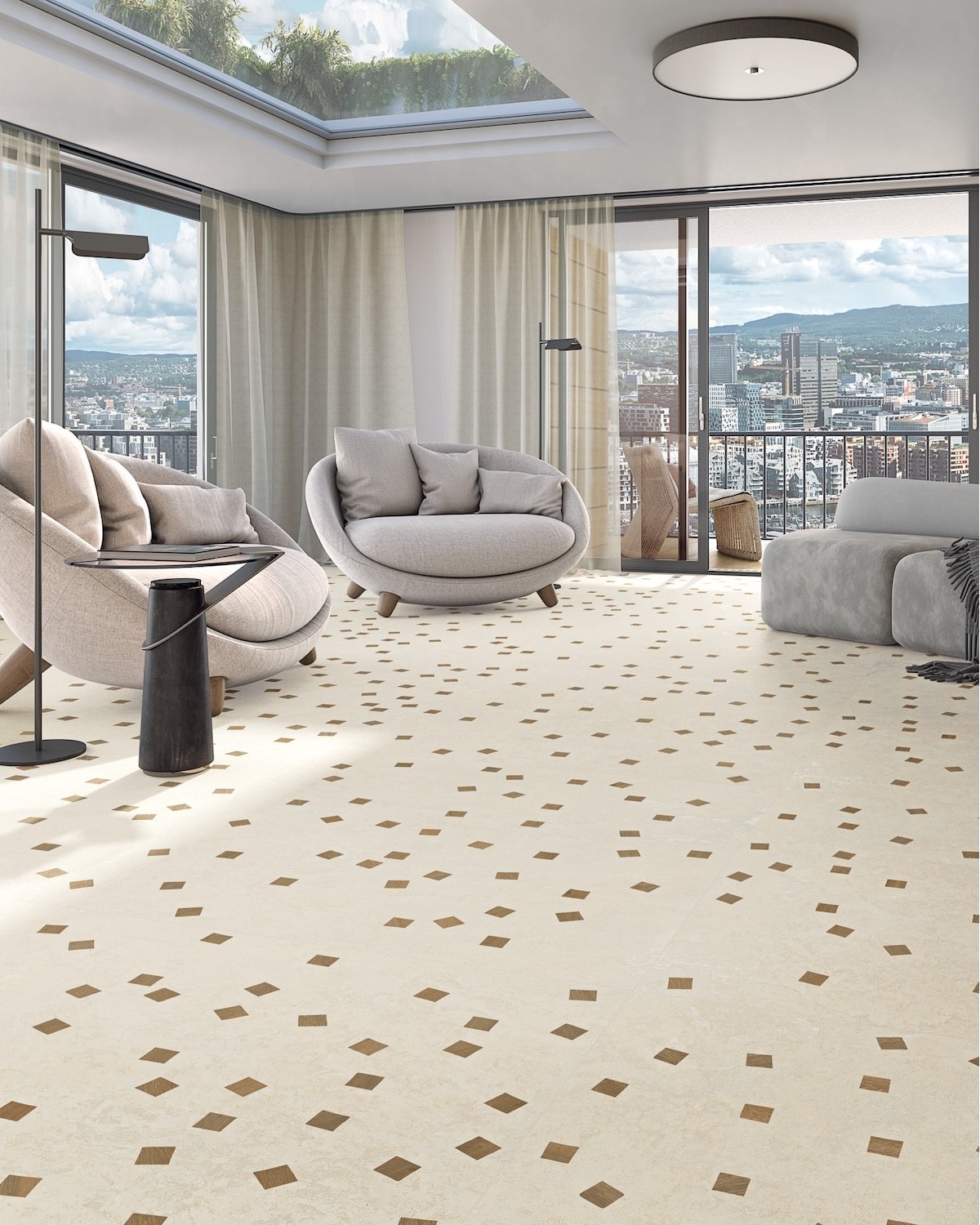
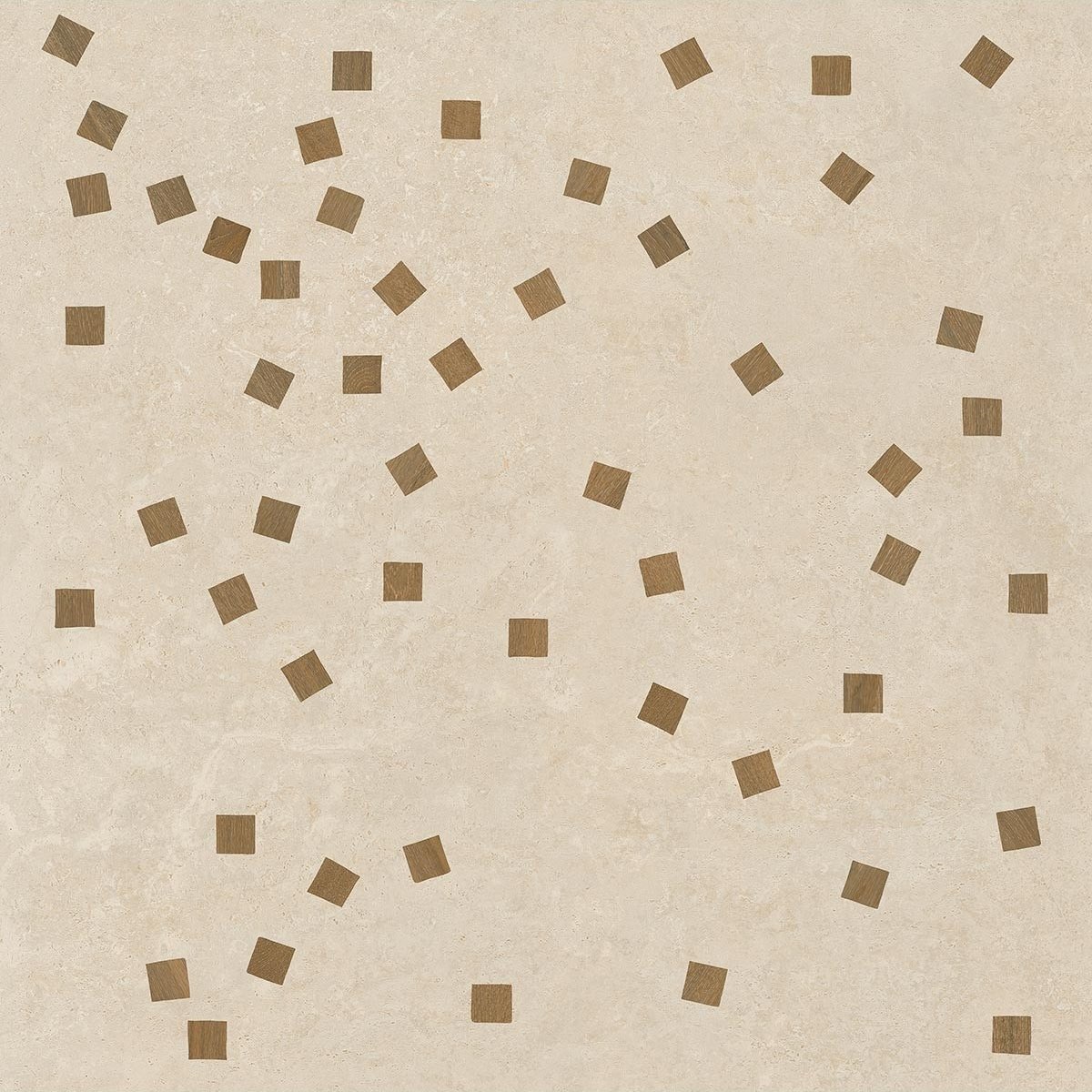
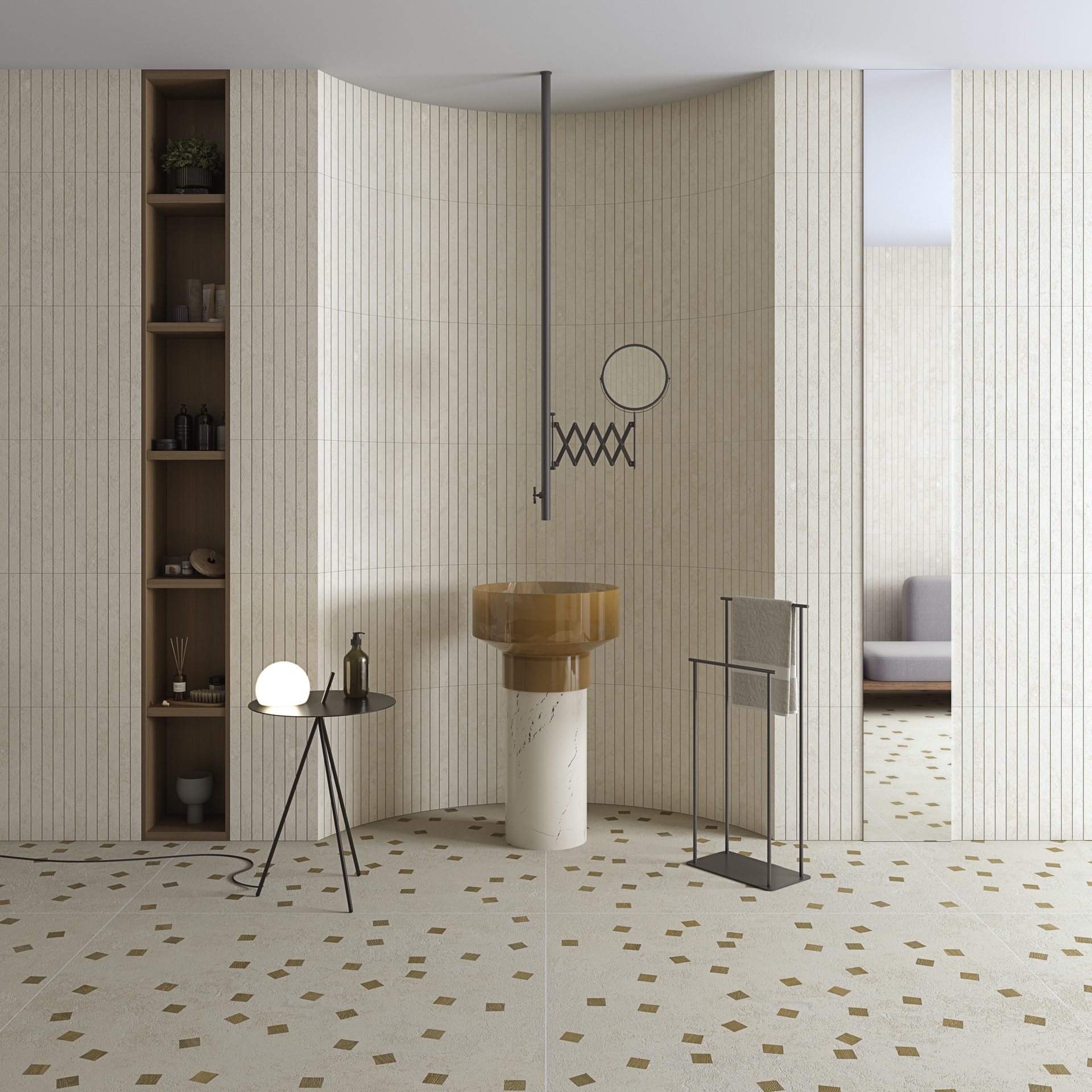
Lambeth-R Natural 120x120, on the other hand, features small brown square shapes distributed irregularly over a pale concrete-effect base. The composition is more spontaneous and visually resembles certain contemporary interpretations of terrazzo, while retaining the matt and mineral background characteristic of London.
Camden conveys order, symmetry and structure. Lambeth introduces movement, irregularity and a freer character. This difference makes it possible to adapt the decoration to the language of each project: Camden suits geometric and balanced interiors, while Lambeth works especially well in creative, eclectic or contemporary settings.
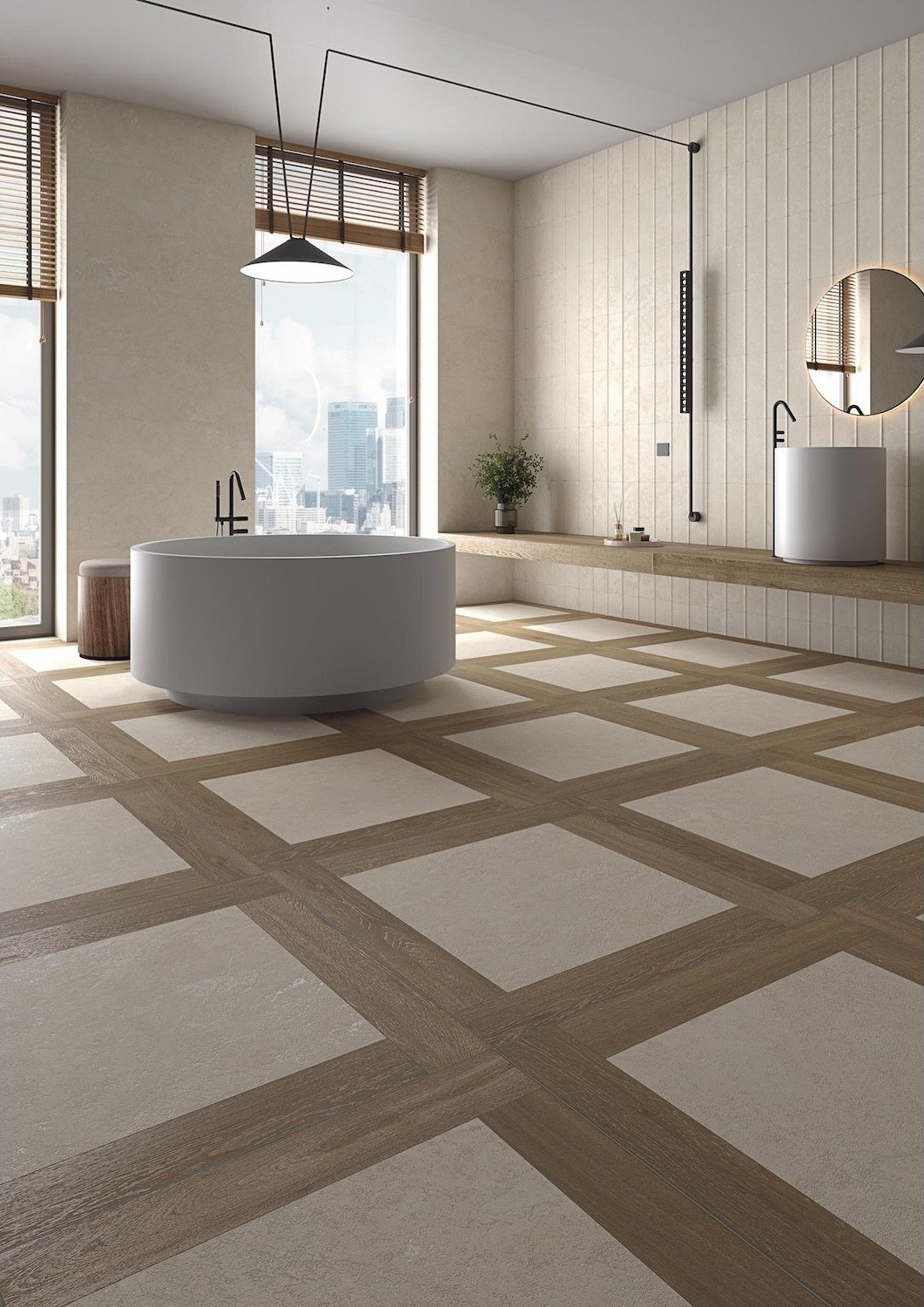
The Camden-R Natural 80x80 model is recognised by its framed square design. The central area retains a pale tone connected with the London Natural base, while the perimeter bands introduce a deeper brown shade. This structure creates a composition within each tile and transforms the floor into a sequence of clearly defined modules.
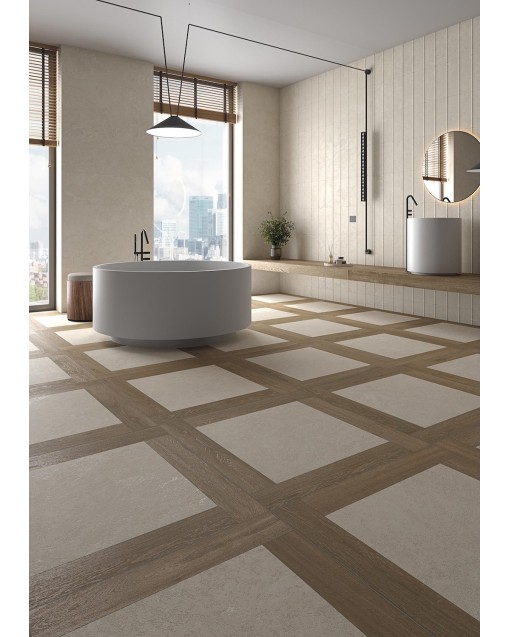
When several pieces are installed together, the frames can connect visually and create a continuous grid of large squares. The floor then takes on a language similar to traditional surfaces created with borders, timber or cut stone, but resolved through a contemporary porcelain tile.
The 80x80 cm format provides enough space for the design to be read clearly. The decoration is not reduced to a small detail, but occupies the whole piece and directly influences the visual organisation of the room. For this reason, Camden can become the main decorative feature without requiring rugs or additional graphic elements.
The composition of Camden recalls traditional floors designed with borders, bands and central fields. The London collection removes the classical ornamentation and replaces it with mineral shades, matt surfaces and clean lines.
This reinterpretation allows Camden to be used in contemporary projects without making the floor appear old-fashioned. The geometry introduces order and a subtle historical reference, while the concrete effect maintains a modern, understated image that combines easily with current furniture.
The contrast between the pale centre and darker frame also helps define each module visually. Depending on the orientation and distribution of the pieces, the floor can resemble a sequence of large panels, an architectural grid or a composition inspired by geometric rugs.
Camden is particularly suitable for rooms where the floor should play an important decorative role. In large bathrooms, it can organise the central area and work with more neutral wall coverings. In living rooms, it can act as a large ceramic rug defining the seating area. In entrance halls, it creates an ordered and carefully considered first impression.
It can also be used in hotels, restaurants, shops and exhibition spaces. The repetition of its frames helps organise circulation and creates a recognisable surface without relying on intense colours.
Furniture can be positioned in relation to the grid. Tables, islands, wall-mounted units or freestanding baths can align with the modules, reinforcing the sense of precision. When the architectural layout and flooring follow the same order, the result gains particular coherence and sophistication.
The brown frame allows Camden Natural to work naturally with medium or dark timber. Oak, walnut and smoked finishes reinforce the depth of the design, while the pale centre preserves brightness.
Black metals introduce a more contemporary reading and emphasise the geometric lines. Brass or bronze finishes add a warmer and more sophisticated note. Beige, cream, sand and brown textiles help maintain a balanced palette.
It can also be coordinated with London Natural wall tiles, pale stone, microcement-effect surfaces and neutral paints. Since the floor already has a strong graphic composition, the walls can remain relatively calm.
In large bathrooms, Camden can define the area around a freestanding bath, double basin or central zone. The brown frame visually outlines each piece and creates a structure that works with glass screens, wall-mounted furniture and straight-lined elements.
Combining it with pale walls prevents the space from feeling overloaded. London Natural wall tiles, vertically textured tiles or coordinated mosaics can complete the project while retaining a mineral palette.
The Camden-R Natural R10 version broadens the possibilities in areas where greater slip resistance is required. The choice between the standard and R10 version should depend on intended use, moisture exposure and the technical conditions of the project.
The Lambeth-R Natural 120x120 decorative tile presents a completely different composition. Small brown square inserts appear over a pale concrete-effect base and are distributed irregularly. The result combines the calm character of London Natural with a more spontaneous graphic rhythm.
The large 120x120 cm format allows the small shapes to spread across a broad surface and prevents the design from appearing too repetitive. The inserts seem to disperse freely, making each tile feel like a fragment of a larger-scale pattern.
The difference in scale between the large tile and the small squares creates a particularly interesting contrast. The base remains dominant, while the darker elements introduce points of colour and movement. The floor retains a bright appearance, but gains far more personality than a completely plain surface.
Lambeth recalls some interpretations of terrazzo through the presence of darker fragments over a pale base. However, its design does not reproduce a dense aggregate mixture, but a much more controlled and graphic distribution of small squares.
This geometry has a contemporary appearance and can be integrated into industrial, Mediterranean, retro or eclectic interiors. The concrete-effect base maintains restraint, while the brown inserts introduce an unexpected detail.
The composition works with timber, plain surfaces and simple furniture. It also combines naturally with warm colours, muted greens, terracotta shades, black and dark metals.
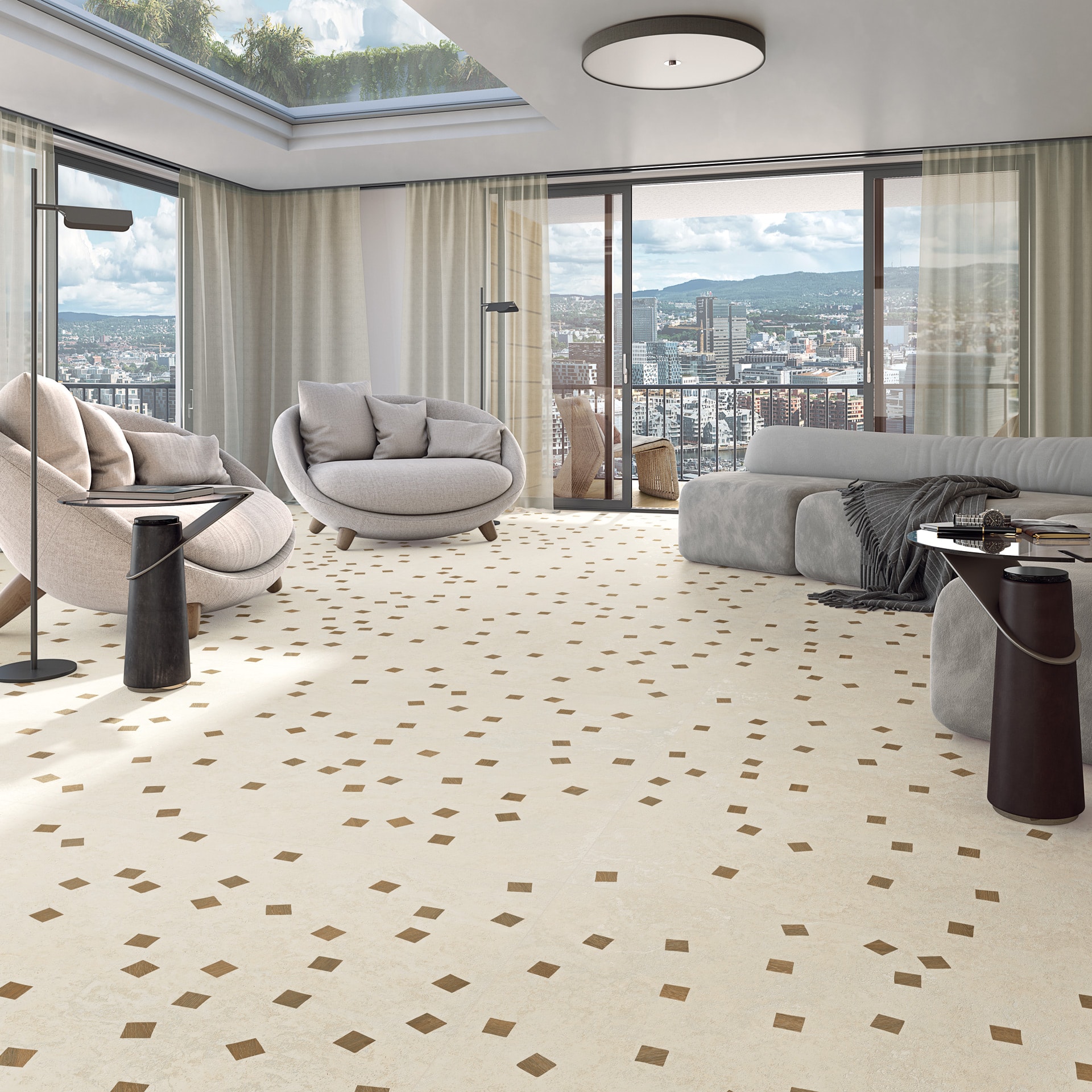
Lambeth can cover an entire room and create a continuous floor punctuated by small dark shapes. In kitchens, it introduces personality without competing with the furniture. In bathrooms, it can extend beneath units and sanitaryware to form a bright, graphic base.
It can also be used selectively. A Lambeth section can define the dining area, central part of a kitchen or reception zone. The remaining floor can be completed with plain London Natural tiles, maintaining colour continuity while differentiating the area through decoration alone.
The 120x120 format reduces the number of joints and allows the design to be read as a broad surface. This is particularly valuable in open-plan spaces, where large-scale tiles help avoid excessive fragmentation.
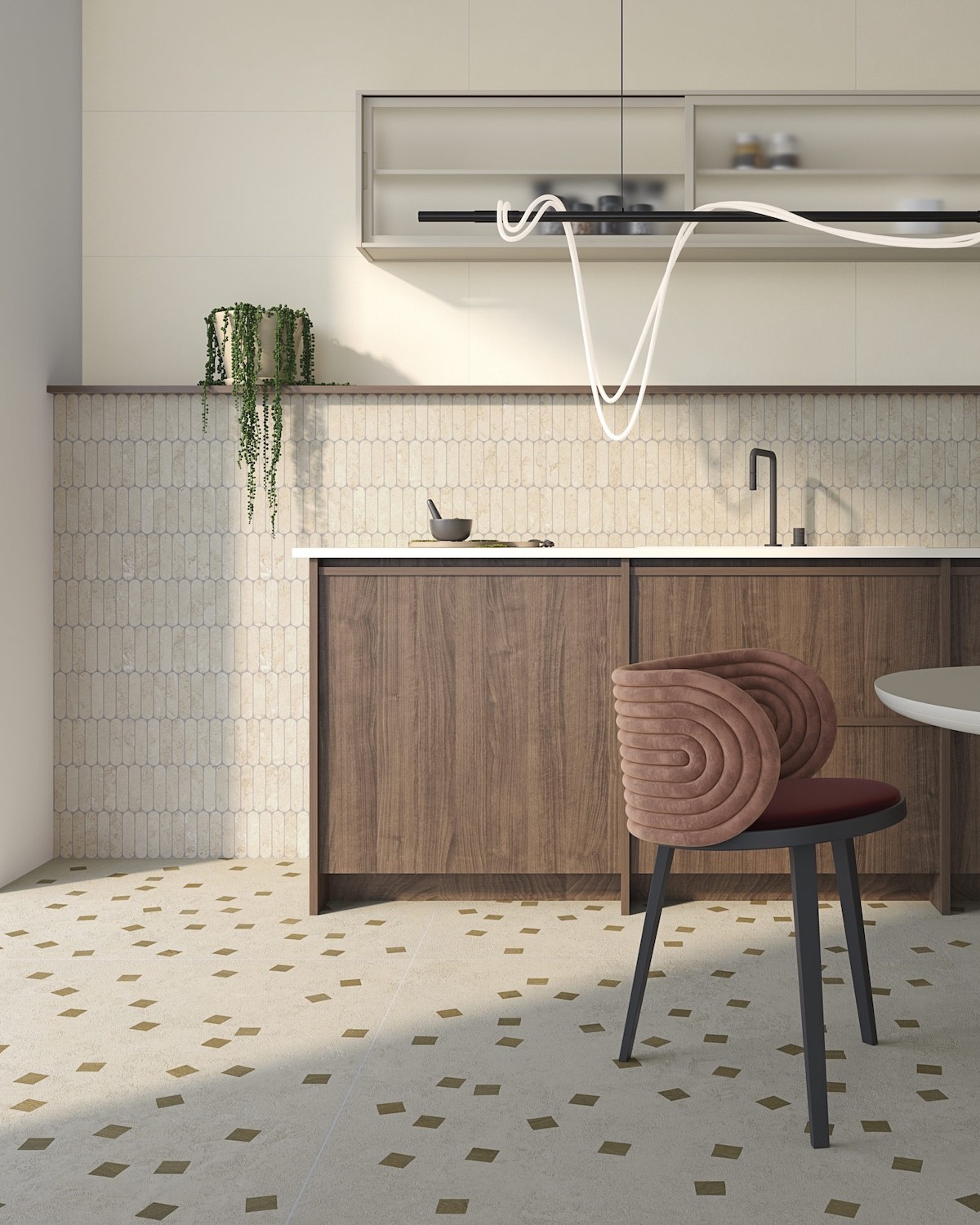
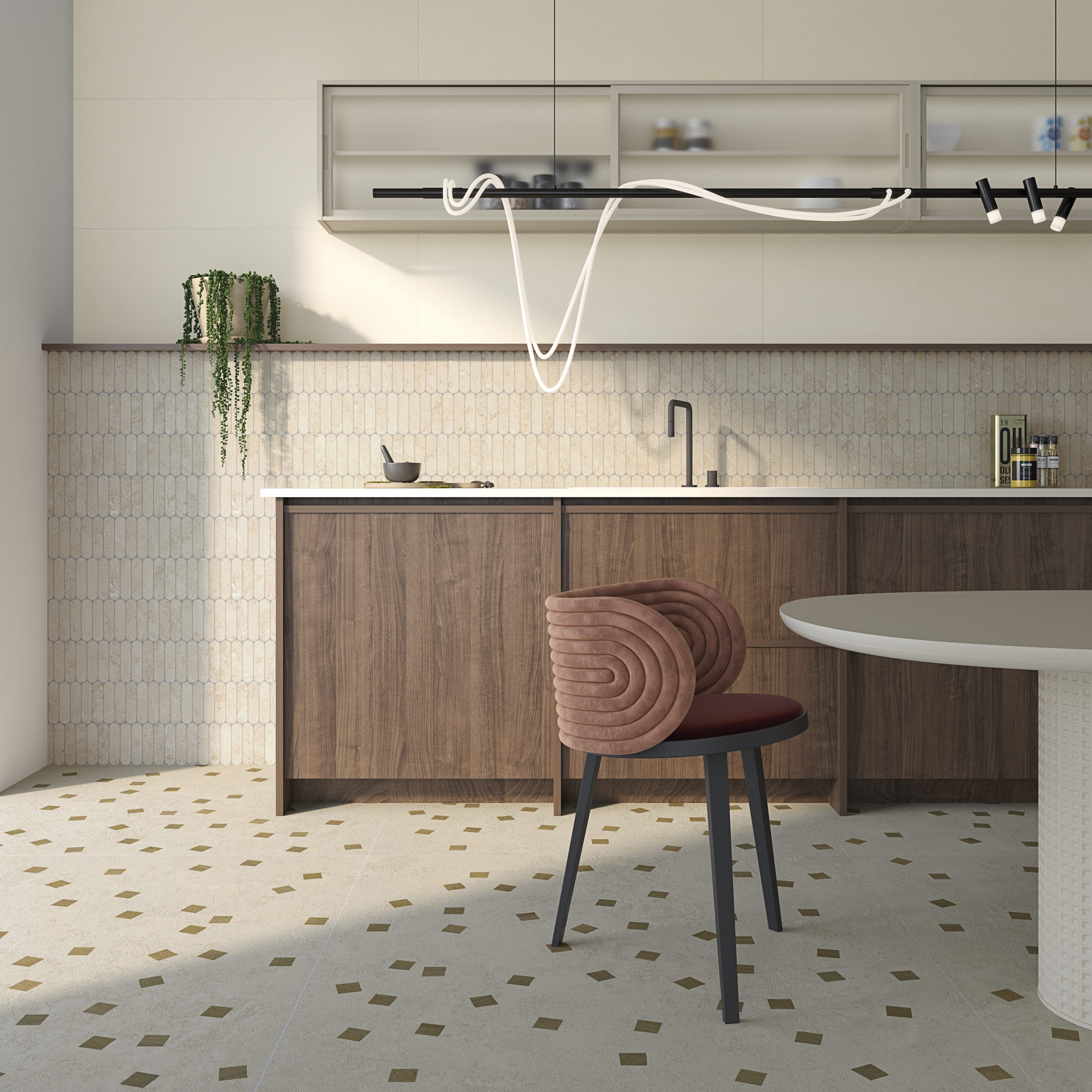
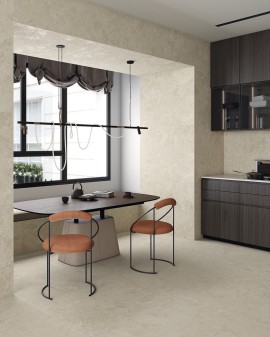
The kitchen is one of the spaces where Lambeth Natural can express its personality most effectively. The small brown inserts work with timber cabinetry, dark fronts and beige or white worktops. The pale background maintains brightness and makes integration into open-plan rooms easier.
In a timber kitchen, the colour of the small squares can be repeated in the cabinetry, creating a direct chromatic relationship. With white furniture, the floor becomes the main decorative feature. With black or graphite fronts, the pale base balances the intensity of the overall composition.
The catalogue image shows Lambeth Natural combined with dark timber furniture, pale wall coverings and muted pink details, demonstrating its ability to participate in warm and contemporary interiors.
The irregular distribution of the small shapes gives Lambeth an identity particularly suited to hospitality and retail projects. It can be used on the floors of cafés, boutiques, reception areas and customer-facing spaces.
The design is recognisable, but it does not depend on a figurative motif or an overly specific trend. This quality makes it possible to create spaces with personality while retaining a lasting aesthetic.
In restaurants, it can be combined with timber, warm-coloured upholstery and black or brass lighting. In shops, it acts as a graphic background for minimalist furniture. In hotels, it can be used in communal areas, washrooms or transition spaces.
Both Camden and Lambeth feature a matt finish that reinforces the mineral appearance of concrete. The surface avoids strong reflections and allows the geometry and tonal changes to become the main visual features.
The matt finish works naturally with timber, fabrics, mineral paints, stone and metal. It also contributes to a calmer atmosphere than a glossy surface would create.
The surface should be maintained using cleaning methods suitable for porcelain stoneware. After installation, adhesive and grout residues should be removed correctly so the tile retains its original appearance.
Both decorative designs are available in standard and R10 versions. Camden-R Natural is produced in 80x80 cm, while Lambeth-R Natural is available in 120x120 cm. Their respective R10 variants retain the same design and format.
The R10 version provides greater slip resistance and may be considered for kitchens, bathrooms, entrances, commercial establishments and other areas occasionally exposed to moisture.
The selection should take account of real use, slope, type of foot traffic and applicable regulations. Not every area requires the same finish, and the decision should form part of the overall technical assessment of the project.
The 80x80 cm format is essential to Camden’s composition. The square creates balanced proportions and allows the frame to develop symmetrically around the central field.
The size is large enough to create visual impact while retaining a clearly perceptible module. In medium-sized rooms, each tile can be read individually. Across larger surfaces, repetition creates an extensive grid.
The rectified format supports precise installation, although the recommended joints and technical installation requirements must always be respected.
The 120x120 cm format allows Lambeth to develop a broader and freer composition. The small inserts are distributed across a large base and create a less repetitive pattern than would be achieved with smaller pieces.
The large dimensions visually reduce the number of joints and improve continuity. In living rooms, open-plan kitchens and commercial spaces, this scale helps the floor read as one general plane.
Handling and installing 120x120 pieces should be carried out with suitable tools and by professionals experienced in large-format tiles. Correct substrate preparation and adhesive application are essential for achieving a stable and even result.
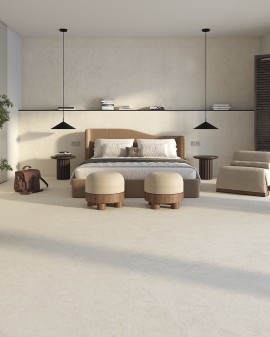
Both decorative models share the London Natural shade and can be combined with the plain base tiles in the collection. This coordination makes it possible to create transitions without introducing strong colour changes.
Camden can be used as a central area surrounded by plain London Natural, creating a large ceramic rug. Lambeth can occupy a specific part of a kitchen or dining room and connect with plain surfaces in circulation areas.
They can also be coordinated with London wall tiles and mosaics, although the number of geometries should be controlled. When the floor has a strong decorative design, the walls can maintain a calmer modulation.
The choice mainly depends on the character required for the space. Camden is more structured, symmetrical and architectural. Its dark frame defines each module and creates a strong sense of order.
Lambeth is freer, more dynamic and creative. Its small inserts are distributed across the pale base and produce a more spontaneous surface.
Camden works especially well in projects where the geometry should relate to furniture, walls and architectural axes. Lambeth is suitable for interiors requiring a graphic floor with a less rigid character.
The Camden and Lambeth decorative porcelain tiles from the London collection by Vives demonstrate that a concrete effect can go far beyond a plain and uniform surface. Through simple geometry, tonal variation and large-scale formats, both designs turn the floor into an active part of the decoration.
Camden-R Natural 80x80 uses a brown frame to create ordered modules and architecturally inspired compositions. Lambeth-R Natural 120x120 distributes small square inserts over a pale base and develops a freer visual language close to contemporary terrazzo.
Both models are available with a matt finish, include R10 versions and coordinate with the London Natural base tiles. They can be used in homes, bathrooms, kitchens, living rooms, hotels, restaurants, shops and interior design projects where the floor needs to contribute design while retaining a warm, balanced and mineral palette.
Data sheet
No customer reviews for the moment.
The Camden and Lambeth decorative tiles from the London collection by Vives expand the possibilities of concrete-effect porcelain stoneware through two large-format compositions with clearly differentiated identities. Camden develops a framed geometric structure in an 80x80 cm format, while Lambeth presents a freer distribution of small square inserts over a 120x120 cm base. Both models share the Natural colour, matt finish and mineral aesthetic of London, but transform the surface through completely different decorative approaches.